
Start here
Your first country walk, step by step
You don’t need special kit or a club to start walking in the countryside. You need a sensible route, the right clothes for the day, and an idea of how long it will take.
In short
- Start with a circular walk of 3 to 5 miles on clear paths, ideally with a café or pub on the way.
- Check the forecast and the sunset time, and allow about 25 minutes a mile plus extra for hills.
- Wear comfortable shoes with grip and take a waterproof, water, a snack and a charged phone.
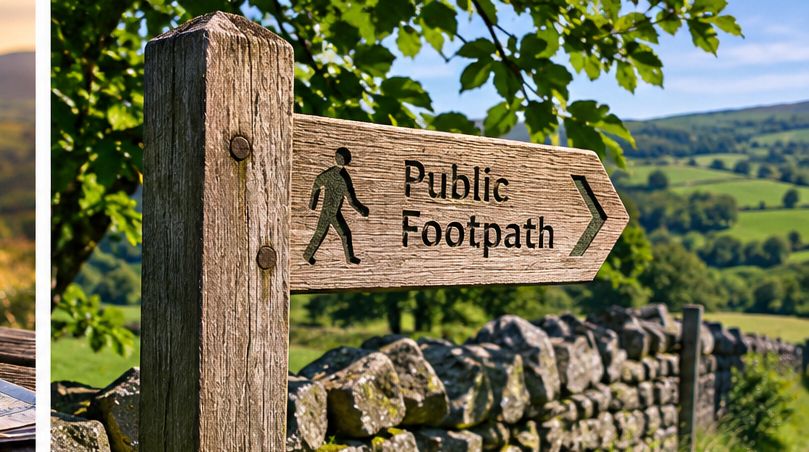
- Follow the yellow arrows for footpaths, leave gates as you find them and keep dogs on a lead near livestock.
1. Choose a route
For a first walk, pick something you can enjoy rather than endure:
- 3 to 5 miles is a comfortable half day for most people.
- A circular route brings you back to the car or bus stop without retracing your steps.
- Clear paths: canal towpaths, country parks, forest tracks and coast paths are easy to follow.
- Somewhere to stop: a café or pub halfway gives you a goal and a toilet.
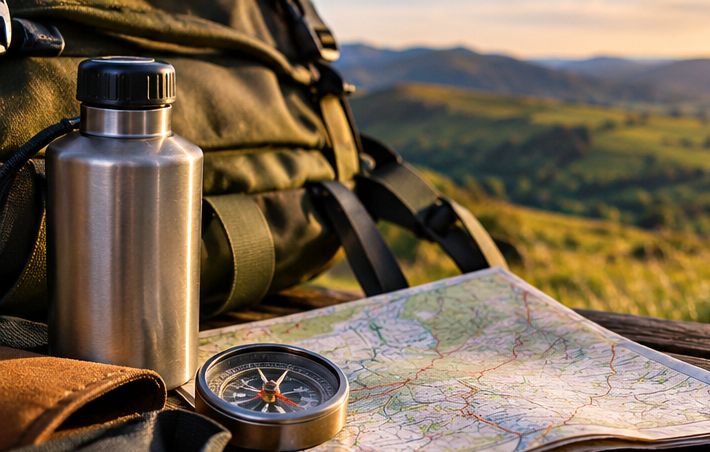
Good places to find routes are your local council’s countryside pages, National Park websites, guidebooks and the walks printed on boards in car parks. An OS Explorer map (the orange ones) shows every public footpath and is worth learning to read.
2. How long will it take?
Most people walk 2 to 3 miles an hour on the flat. Hills slow you down: allow about an extra 10 minutes for every 100 metres you climb. Then add time for stops, photos and mud.
Try our walking time calculator. For a first walk, plan to be back at least an hour before sunset.
3. What to wear and take
You don’t need to buy everything at once. For a short walk in fair weather:
- Footwear with grip. Trainers are fine on dry paths; walking shoes or boots help in mud and on rocky ground. Wear them in before a long walk.
- Layers, not one thick coat. A T-shirt, a fleece or jumper and a waterproof jacket let you adjust as you warm up. Avoid jeans: they get heavy and cold when wet.
- Water and a snack, even on a short walk.
- A charged phone with the route saved, plus a paper map if you have one.
- Small first aid bits: plasters, blister plasters and any medicine you need.
Our free day walk kit checklist has the full list, with extras for hills and winter.
4. Signs, arrows and gates
In England and Wales, rights of way are marked with coloured arrows on posts, stiles and gates. The colour tells you who can use the path:
- Yellow: footpath. Walkers only.
- Blue: bridleway. Walkers, horse riders and cyclists.
- Plum: restricted byway. Anything except motor vehicles.
- Red: byway open to all traffic. Including vehicles, though often just a rough track.
Scotland works differently: you have a right of responsible access to most land, so you’ll see fewer arrows. Many routes have green and white signposts from ScotWays, the Scottish rights of way charity.
5. The Countryside Code
The Countryside Code comes down to three things: respect everyone, protect the environment, and enjoy the outdoors. In practice:
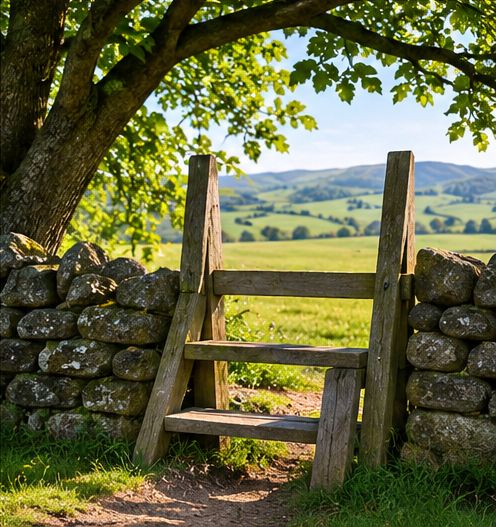
- Leave gates and property as you find them.
- Stay on the path across farmland, even if it’s muddy.
- Take all your litter home, including fruit peel.
- Don’t block gateways or lanes when you park.
- Be friendly to other path users and give way to horses.
6. Walking with a dog
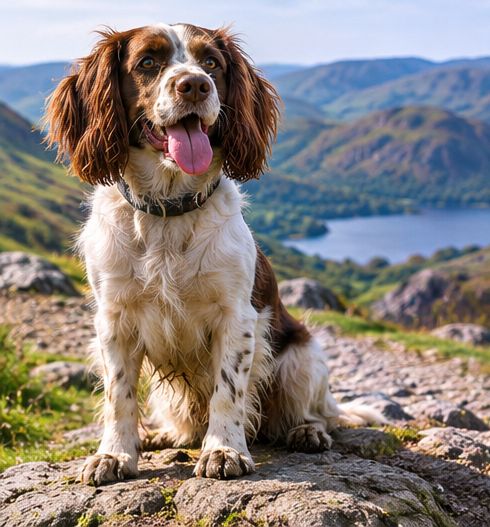
- Keep your dog on a short lead near sheep, cows and horses, and from 1 March to 31 July on open access land, when birds nest on the ground.
- If cattle come towards you and you feel threatened, let go of the lead. Your dog can outrun them and so can you, more easily apart.
- Walk calmly round cows with calves rather than through the middle of the herd.
- Bag and bin it: take dog mess home if there’s no bin.
- Carry water for the dog on warm days.
7. Staying safe
- Check the forecast on the day. On hills, the weather can change fast and is colder and windier than in the valley.
- Tell someone where you’re going and when you expect to be back.
- Turn back if the weather turns or the path is harder than you expected. The walk will still be there next week.
- In an emergency, call 999 and ask for the police, then mountain rescue (or the coastguard on the coast).
8. After your walk
Write down where you went, how far and how long it took. After a few walks you’ll know your own pace, and you’ll have a list of favourites to go back to. Our walking planner does this for you in Google Sheets, and the National Trails are there when you’re ready for something longer.